
How Celebrity Look Alike Matching Works: The Technology Behind the Mirror
Many people wonder how digital systems can identify that someone looks like a celebrity or determine which stars share striking facial similarities. At the core of modern matching tools is facial recognition and machine learning. These systems analyze facial landmarks — points such as the corners of the eyes, tip of the nose, mouth corners, and jawline — and convert those measurements into a numerical facial signature. That signature can then be compared against a database of known faces to find close matches.
Our AI celebrity look alike finder and face identifier uses advanced face recognition technology to compare your face against thousands of celebrities. Whether you want to find what celebrity i look like, search celebrities that look alike, or discover what actor do I look like — here is how it works from start to finish. First, a clear, well-lit photo is uploaded and preprocessed to normalize lighting and orientation. Next, facial landmarks are located, and a deep neural network transforms that information into an embedding vector: a condensed representation of the face that captures its unique geometry and texture. Finally, that vector is matched against celebrity embeddings using similarity metrics like cosine distance or Euclidean distance to rank the closest look-alikes.
Quality controls and human oversight matter: advanced systems incorporate demographic balancing to reduce bias, and they often include confidence scores that indicate how closely a match aligns. Privacy safeguards such as image encryption and temporary processing ensure that photos are not stored longer than necessary. This blend of computer vision, statistical matching, and ethical guardrails is what powers reliable celebrity look alike tools today.
Why People See Celebrity Doppelgängers: Psychology and Visual Perception
Humans are wired to notice faces. The brain has specialized networks that recognize facial features and categorize them quickly, which is why the experience of being told you "look like" someone famous can feel immediate and convincing. Perception relies on salient features — prominent cheekbones, eyebrow shape, or a distinctive smile — that cue the brain to associate one face with another. Cultural familiarity plays a role too: if a celebrity is highly visible, people are more likely to draw comparisons, even when the resemblance is partial.
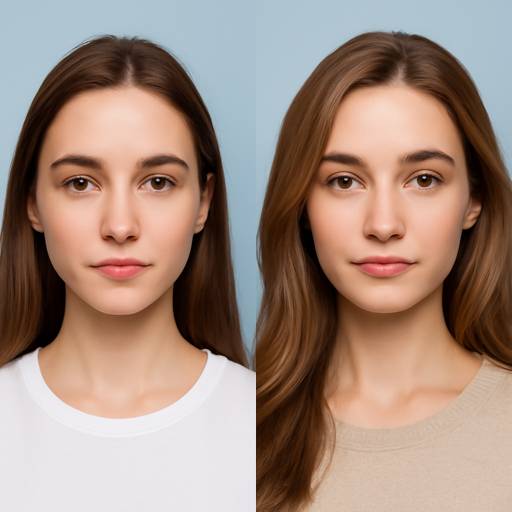
Beyond perception, cognitive biases influence how strongly we see similarities. The representativeness heuristic leads us to match a person to an archetype; if a few key traits line up, we may overlook differences. Context and hairstyle can amplify resemblances: a similar haircut, makeup, or expression can make two otherwise different faces seem nearly identical. Lighting and camera angle also matter — the same person may look more or less like a given celebrity depending on how a photo is taken.
Social factors influence the phenomenon as well. Celebrity look-alike discussions drive engagement on social media, encouraging people to find "who they resemble" as a form of playful identity exploration. This is reflected in search queries and phrases like looks like a celebrity or look alikes of famous people. Ultimately, the combination of neurological face-processing mechanisms, cognitive shortcuts, and social influence explains why people consistently spot doppelgängers in everyday life.
Real-World Examples and How to Use AI Tools to Find Your Match
Case studies show a range of outcomes for celebrity matching. In entertainment casting, directors sometimes use look-alike matches to find doubles or younger/older versions of characters. Fans often discover uncanny resemblances between themselves and movie stars, athletes, or musicians and then share side-by-side comparisons online. For example, a viral photo pairing an everyday commuter with a famous actor can spark thousands of shares, demonstrating the cultural appeal of resemblance.
For individuals curious about what celebrity they resemble, AI-driven apps simplify the process. Upload a clear headshot and let the system analyze facial geometry and textures. While automated matches are fast, interpreting results requires nuance: a top-ranked celebrity might share one or two defining features rather than being an exact look-alike. Combining algorithmic output with human judgment — asking friends or testing different photos — yields the most satisfying comparisons. Many users report discovering both expected matches and surprising cross-gender or cross-ethnicity resemblances that broaden their perspective on facial similarity.
If you want a quick and fun way to see who you most resemble in popular culture, try tools that specialize in celebrity comparisons. For a seamless experience that matches your photo against a large celebrity database, try celebs i look like and review the ranked results to learn which famous faces align with your features. Use multiple photos (different angles and expressions) to get a fuller picture, and pay attention to the confidence indicators the tool provides.

Dhaka-born cultural economist now anchored in Oslo. Leila reviews global streaming hits, maps gig-economy trends, and profiles women-led cooperatives with equal rigor. She photographs northern lights on her smartphone (professional pride) and is learning Norwegian by lip-syncing to 90s pop.
